
THE METHOD · HOW TO TASTE, AND HOW TO SCORE
How to taste whiskey.
Tasting isn't a talent. It's a habit — and you can build it in six pours.
Nobody is born able to find dried fig in a glass of bourbon. What experienced tasters have isn't a better nose — it's a vocabulary, a method, and the patience to sit with a glass for twenty minutes. This is the system the three of us use, and the one we ask you to use when you leave a review.
PART ONE · THE METHOD
Six steps. Twenty minutes. No hurry.
01
THE GLASS
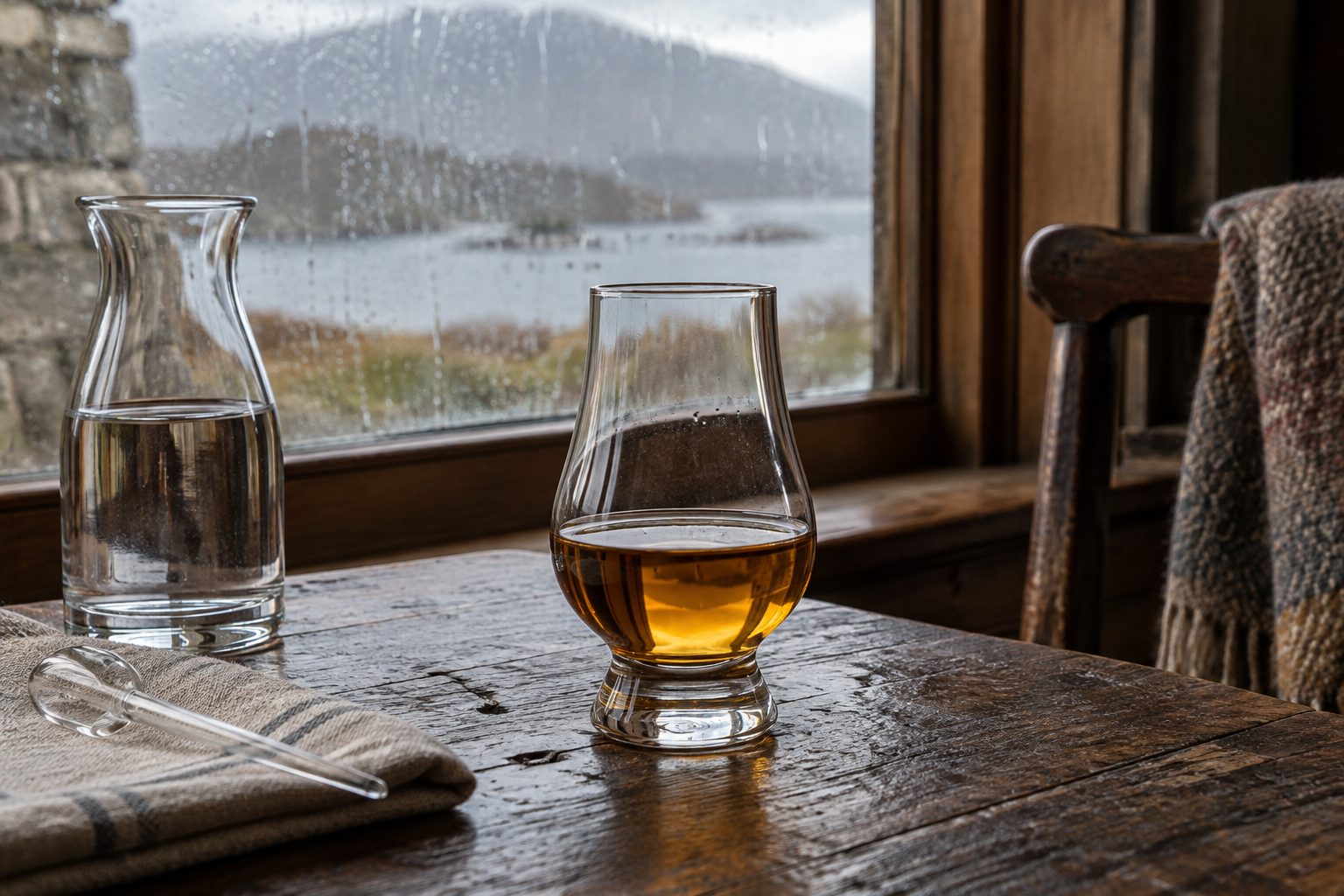
A tulip shape — a Glencairn, a copita, even a wine glass. Never a tumbler: straight sides let the aroma escape, and the aroma is most of the flavour.
02
THE POUR
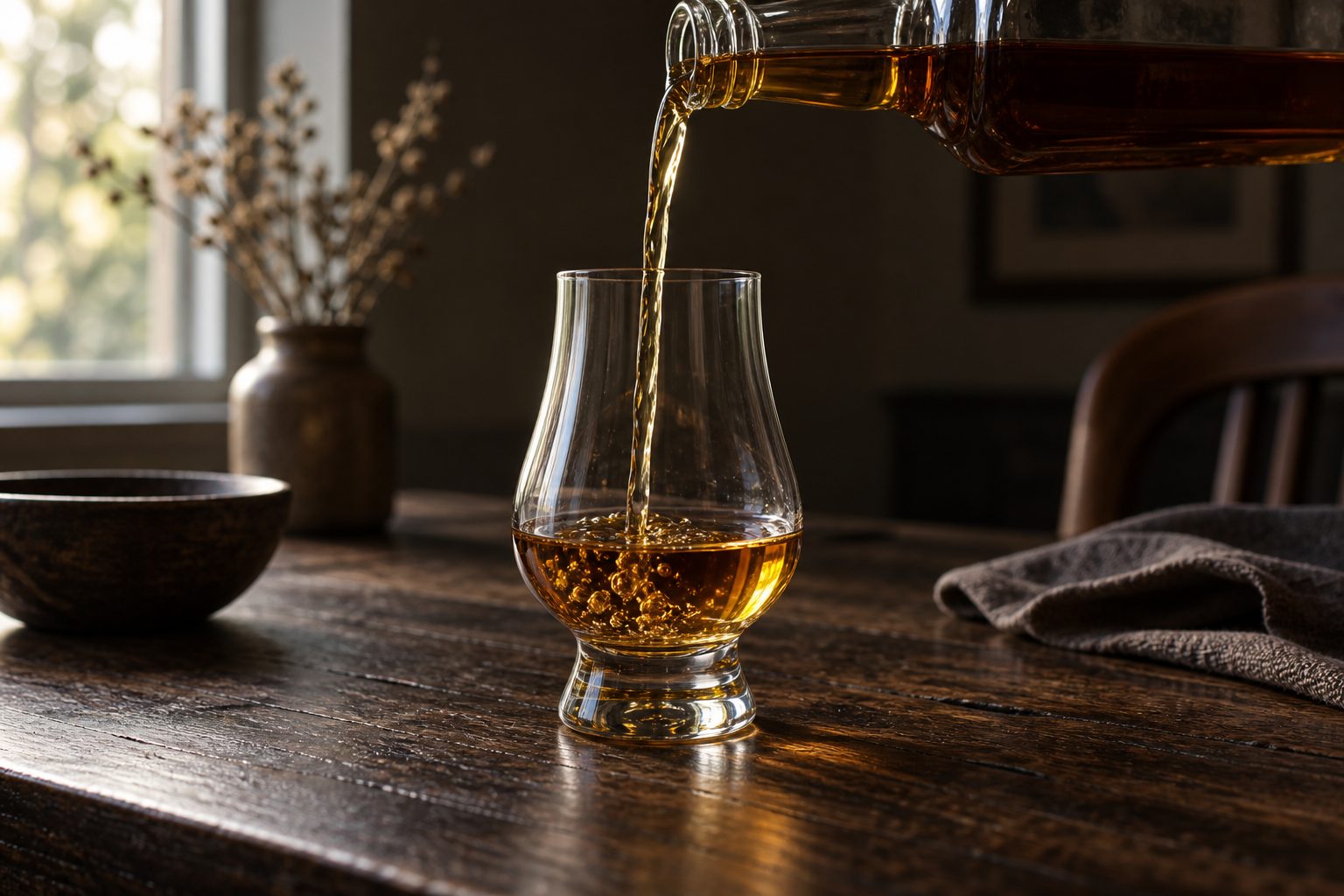
About 30ml. Then leave it alone for five minutes; ten is better. Whiskey opens like a fist unclenching — pour and sniff immediately and all you get is alcohol.
03
THE LOOK
Colour tells you less than the industry pretends: caramel colouring is legal almost everywhere. The legs running down the glass are more honest — they hint at viscosity.
04
THE NOSE
Mouth slightly open, nose above the rim and not buried in it. Short sniffs, never deep ones. Then take the glass away and think. Most of what you 'taste' happens here.
05
THE SIP
Small. Coat the whole mouth and hold it. The first sip only wakes the palate up — it will taste hotter and simpler than the whiskey really is. The second sip is the real one.
06
THE FINISH
Swallow, wait, and notice what's still there after thirty seconds. Length isn't quality — but a finish that turns bitter, or vanishes instantly, is telling you something.
ON WATER
Add it if you want to — one drop at a time, and only after you've tasted it neat. Water opens some whiskies and drowns others, and above about 46% ABV it usually helps. Nobody serious will judge you for it. Ice is a different matter: it numbs the palate and shuts the nose down, which is fine if you're drinking and wrong if you're reviewing.
PART TWO · THE VOCABULARY
The twelve families.
You can't describe what you can't name. These twelve are the entire vocabulary we use — the same twelve that tag every bottle on this site, so once you learn them you can browse with them. When you're stuck, run down the list like a checklist and ask: is it any of these?
PEATED & SMOKY
Smoke from barley dried over peat fire.
Bonfire · iodine · tar · ash · medicinal · bacon
LEARN IT FROM
Lagavulin 16
SHERRIED
Casks that held Spanish fortified wine first.
Raisin · fig · dark chocolate · dried orange · walnut
LEARN IT FROM
Redbreast 21
RICH & OAKY
Time in wood. Usually a lot of it.
Leather · tobacco · vanilla · tannin · coconut · clove
LEARN IT FROM
Michter's 20 Year
SWEET & EASY
Corn, and casks that give more than they take.
Caramel · honey · butterscotch · toffee · maple
LEARN IT FROM
Elijah Craig 18
SPICY / HIGH-RYE
Rye grain, and the pepper it brings.
Black pepper · clove · cinnamon · mint · dill · anise
LEARN IT FROM
WhistlePig 15
ORCHARD FRUIT
Clean, bright, fresh-fruit character.
Green apple · pear · peach · apricot · quince
LEARN IT FROM
Yamazaki 12
TROPICAL
Hot climates, fast maturation, exotic fruit.
Mango · lychee · passionfruit · pineapple · guava
LEARN IT FROM
Kavalan Solist Vinho
LIGHT & FLORAL
Delicate, high-toned, easy to miss.
Meadow · citrus blossom · cut grass · honeysuckle
LEARN IT FROM
Hakushu 12
CREAMY & MALTY
Texture as much as flavour — that oily coat.
Cereal · custard · buttered toast · porridge
LEARN IT FROM
Green Spot
COASTAL & BRINY
You can taste the postcode.
Sea spray · salt · wet rope · oyster shell · seaweed
LEARN IT FROM
Talisker 10
CASK STRENGTH
Not a flavour — a format. Undiluted, uncut.
Heat · intensity · concentration · needs water
LEARN IT FROM
Redbreast 12 Cask Strength
BEGINNER-FRIENDLY
Low burn, obvious pleasures, nothing to forgive.
Soft · sweet · rounded · no sharp edges
LEARN IT FROM
Wild Turkey 101
PART THREE · THE SCORE
One number. Out of a hundred.
We don't break a score into sub-scores for nose, palate and finish. It looks scientific and it isn't — nobody can honestly tell you a finish is 23 out of 25. Taste the whole thing, sit with it, then give it one number and be ready to defend that number to someone who disagrees.
THE UNICORN SHELF
Order it. Cancel the meeting if you have to.
SUPERIOR
The reason this site exists.
THE GOOD POUR
Order with confidence, buy with a plan.
HOUSE POUR
Fine. Nobody writes home.
SKIP THE ROUND
And say so, plainly. A scale that can't go down is just a compliment.
CALIBRATION
Almost everything worth reviewing lands between 84 and 93. If every bottle you pour scores above 90, your scale is broken — you've stopped rating and started applauding. Use the bottom of the range. It's what makes the top of it mean something.
PART FOUR · HOUSE RULES
Five rules for reviewers.
Taste it yourself.
Never score a bottle from someone else's notes, a sample you didn't pour, or a memory of a bar you liked.
Score before you read.
Commit to your number before you look at anyone else's — including ours. Otherwise you're not reviewing, you're agreeing.
Price is not quality.
Score the liquid. Then say whether it's worth the money in a separate sentence. They are two different questions and people conflate them constantly.
Disclose anything free.
A bottle someone sent you changes nothing about your palate and everything about your incentives. Say it, every time.
One bottle, one sitting.
Don't average across batches, years, or a pour you half-remember. Single barrels in particular vary — score the one in front of you.
COMMON QUESTIONS
Do I need an expensive glass?
No. A cheap Glencairn is about ten dollars, and an ordinary wine glass works nearly as well. What doesn't work is a tumbler — straight sides let the aroma walk away, and the aroma is most of the flavour.
What if I can't find any flavours?
Completely normal, and it isn't your nose. It's vocabulary. Run down the twelve families like a checklist and ask 'is it any of these?' — naming comes before noticing, not the other way round. It gets faster every time.
Should I add water?
Taste it neat first, always. Then add water a single drop at a time. Above about 46% ABV it usually opens things up; below 43% it can flatten them. Ice is for drinking, not for reviewing — it numbs the palate and closes the nose.
What's the difference between my review and a Superior Rating?
Everything on this site is one palate unless it carries the ∴ mark. A Superior Rating means a distillery sent the bottle, all three of us tasted it blind, and the scores were averaged. Your review is a real review — it just isn't a panel.